
A clearer journey, in your pocket.
Explore checkpoints, book a crossing, try payments and follow WeChat notifications. The preview reuses the mini program’s actual screens, with its original Chinese and Russian interfaces.
All records, availability and amounts are illustrative. No real bookings, charges or notifications are sent.

A closer look at the whole journey.
Swipe through the main screens. Actual interfaces, with illustrative data.
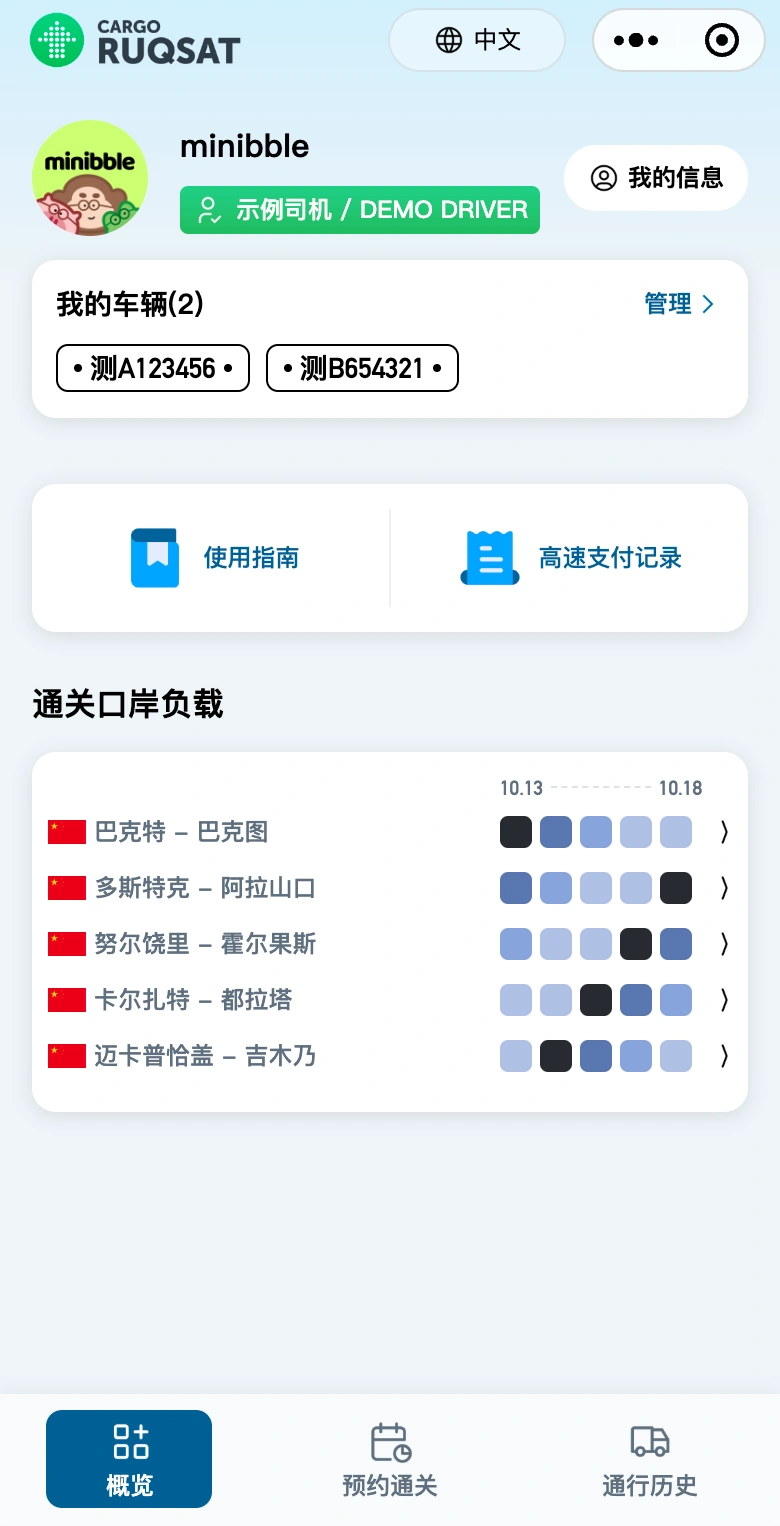
Start with a clear overview
Driver, vehicles and availability at five checkpoints in one place.
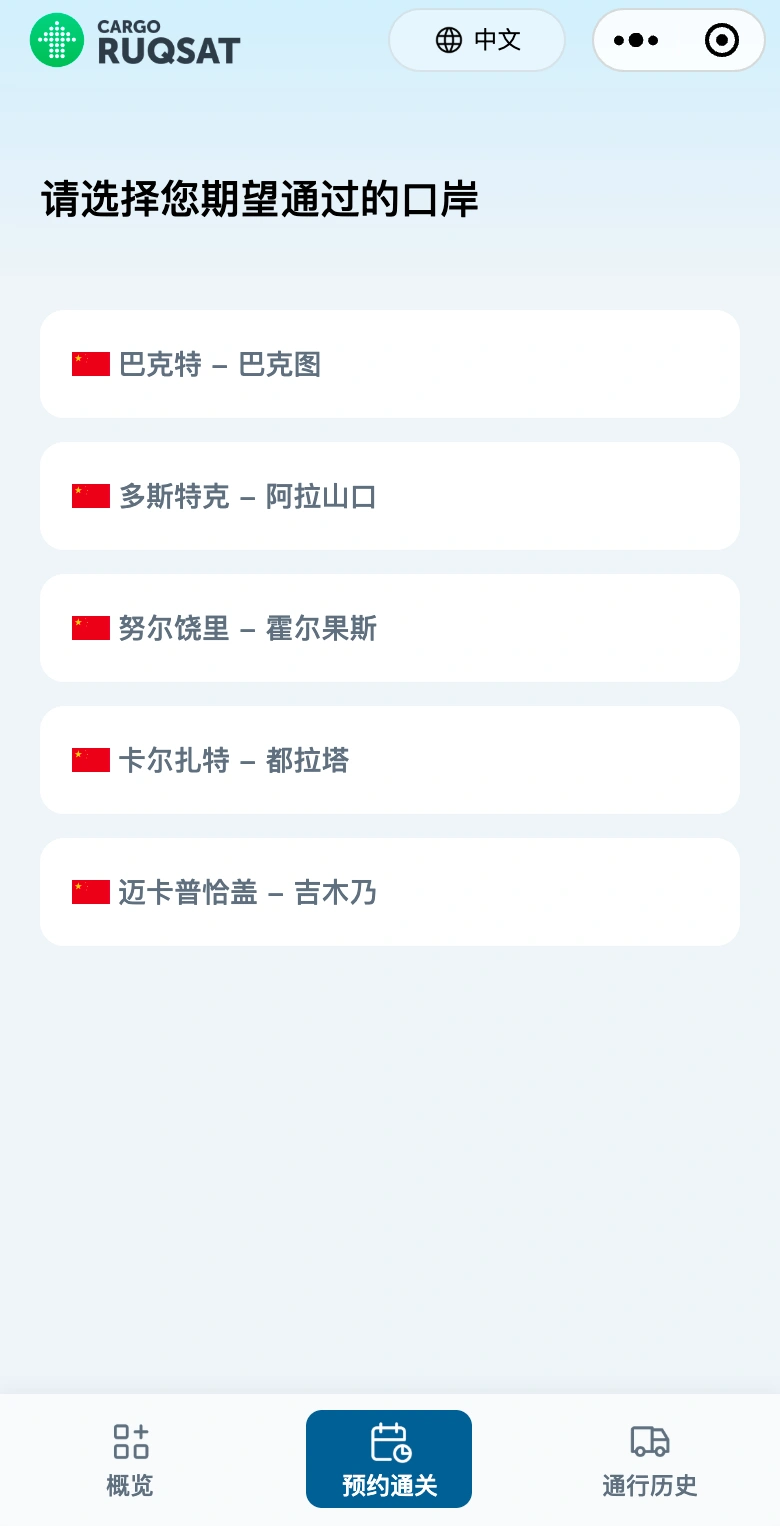
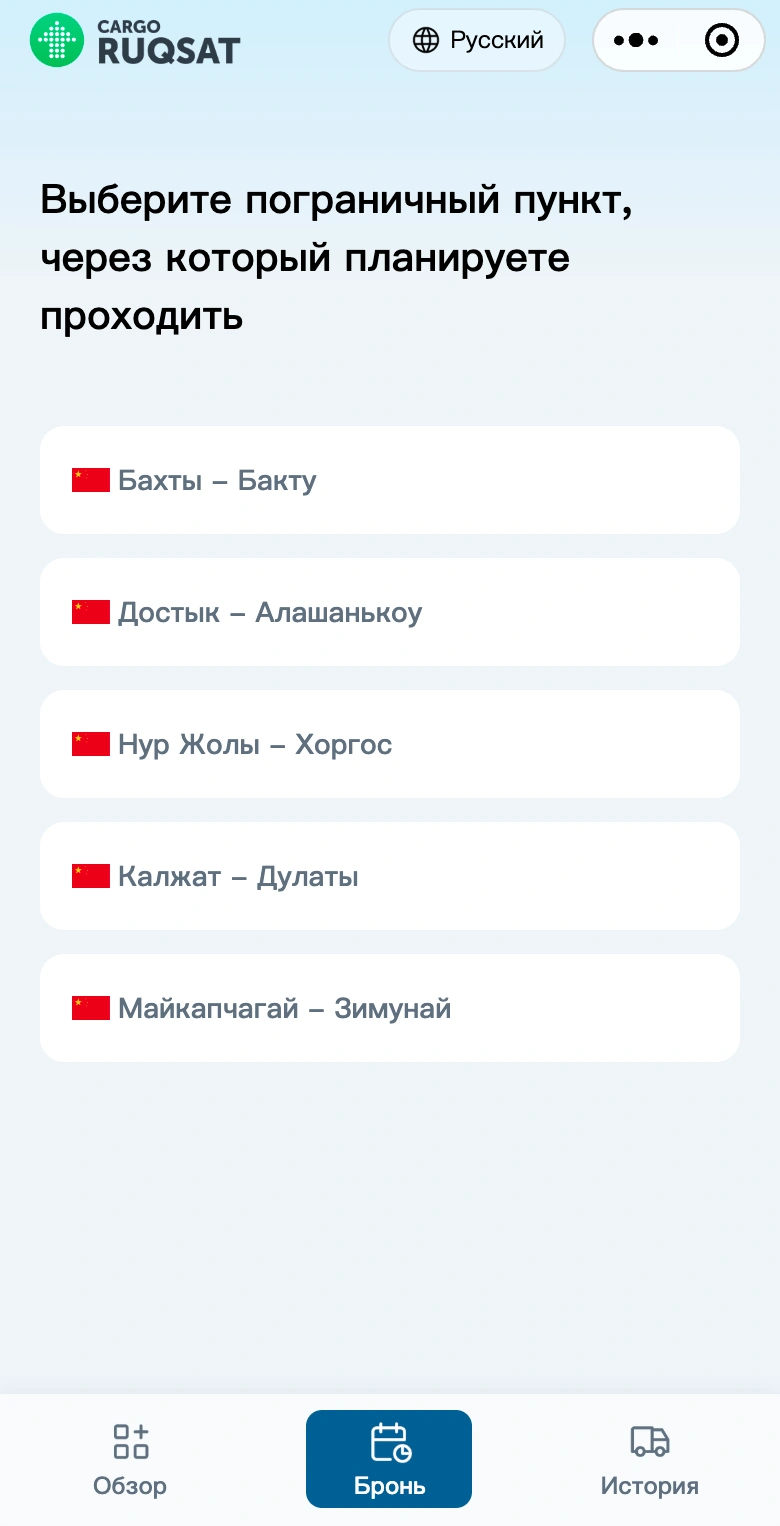
Choose a checkpoint
Find the crossing that fits the journey.
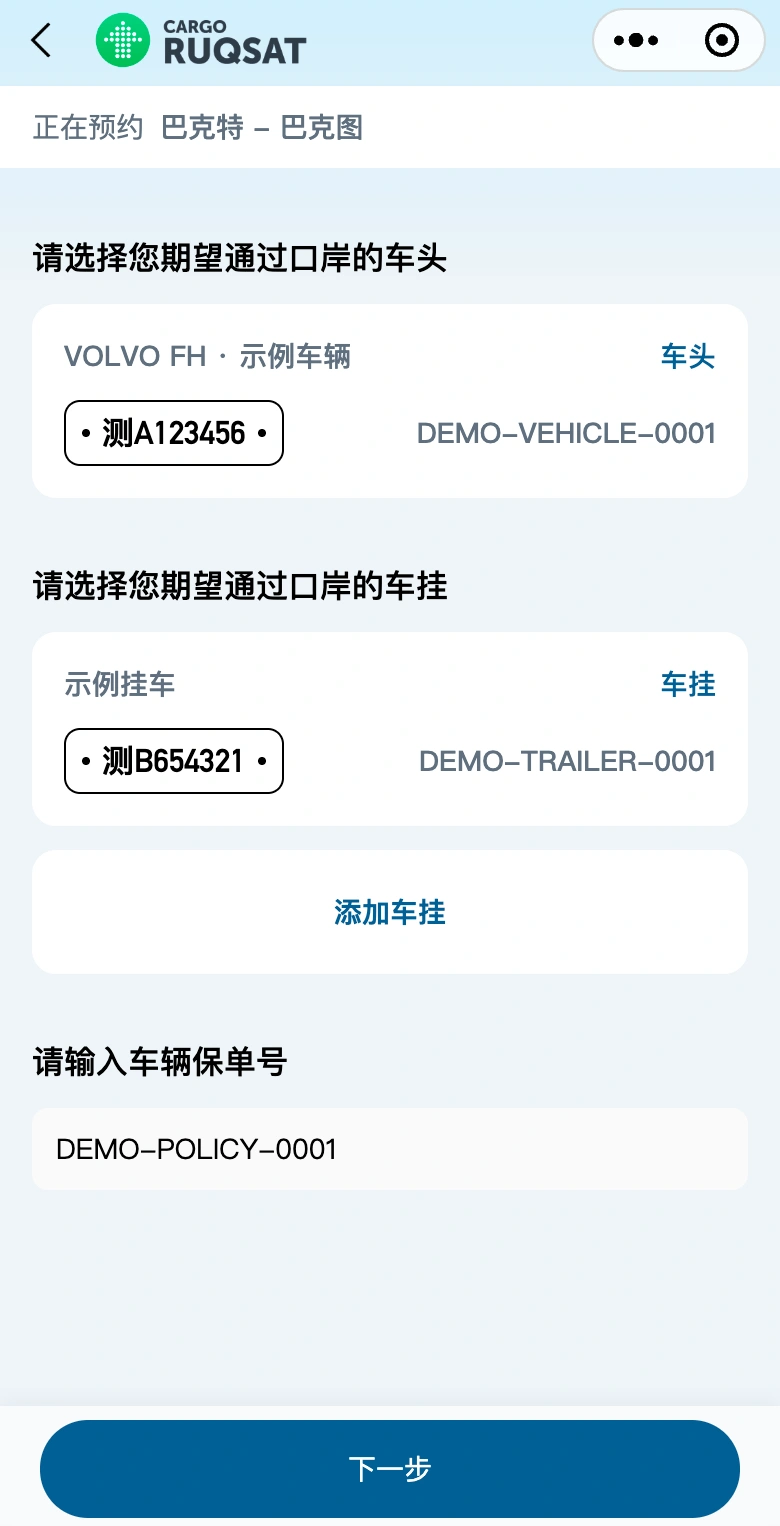
Keep vehicles connected
Review the truck, trailer and sample insurance details.
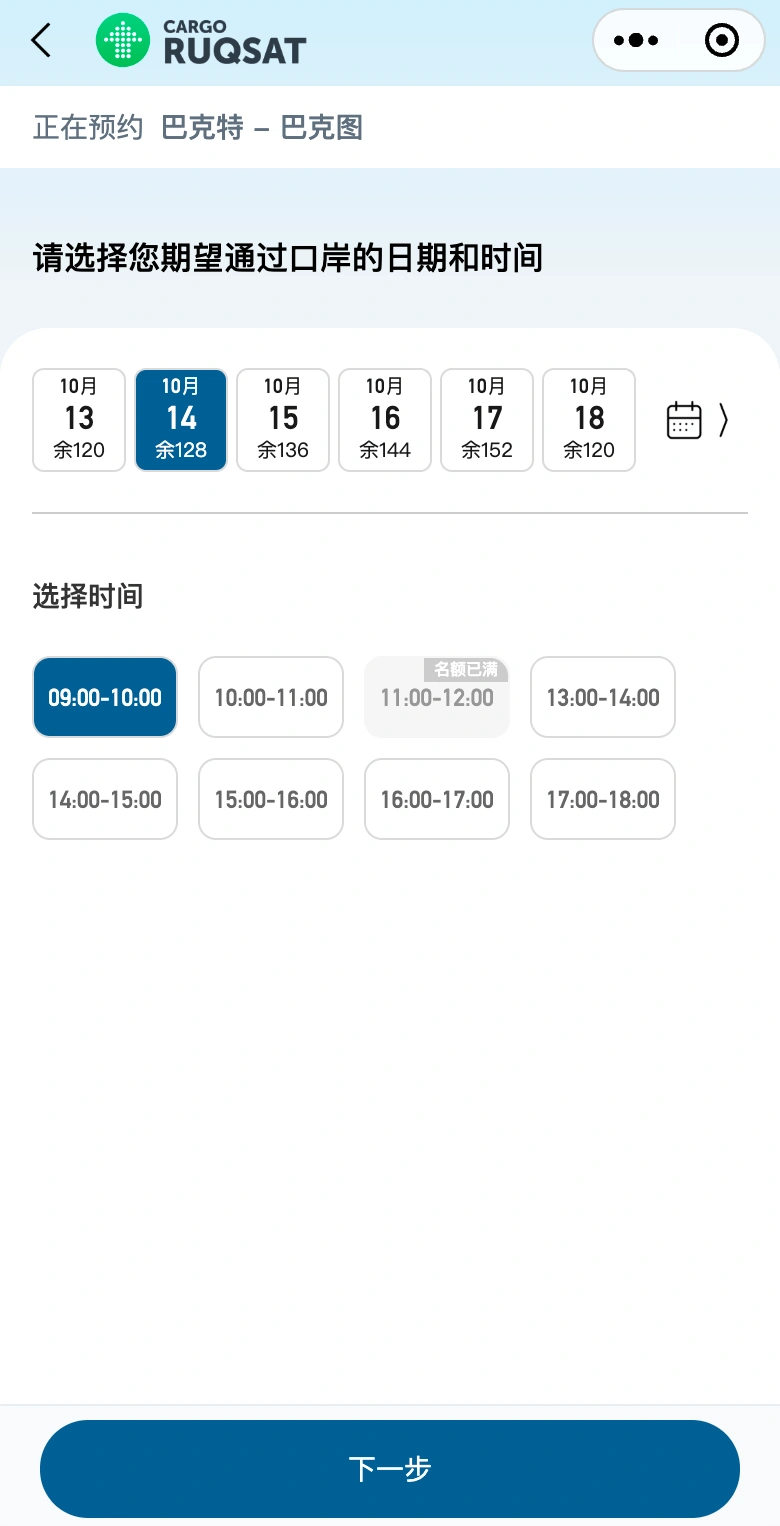
Pick a date and time
Available days, remaining places and full slots are easy to see.
Confirm the driver
Reuse driver details for the next booking.
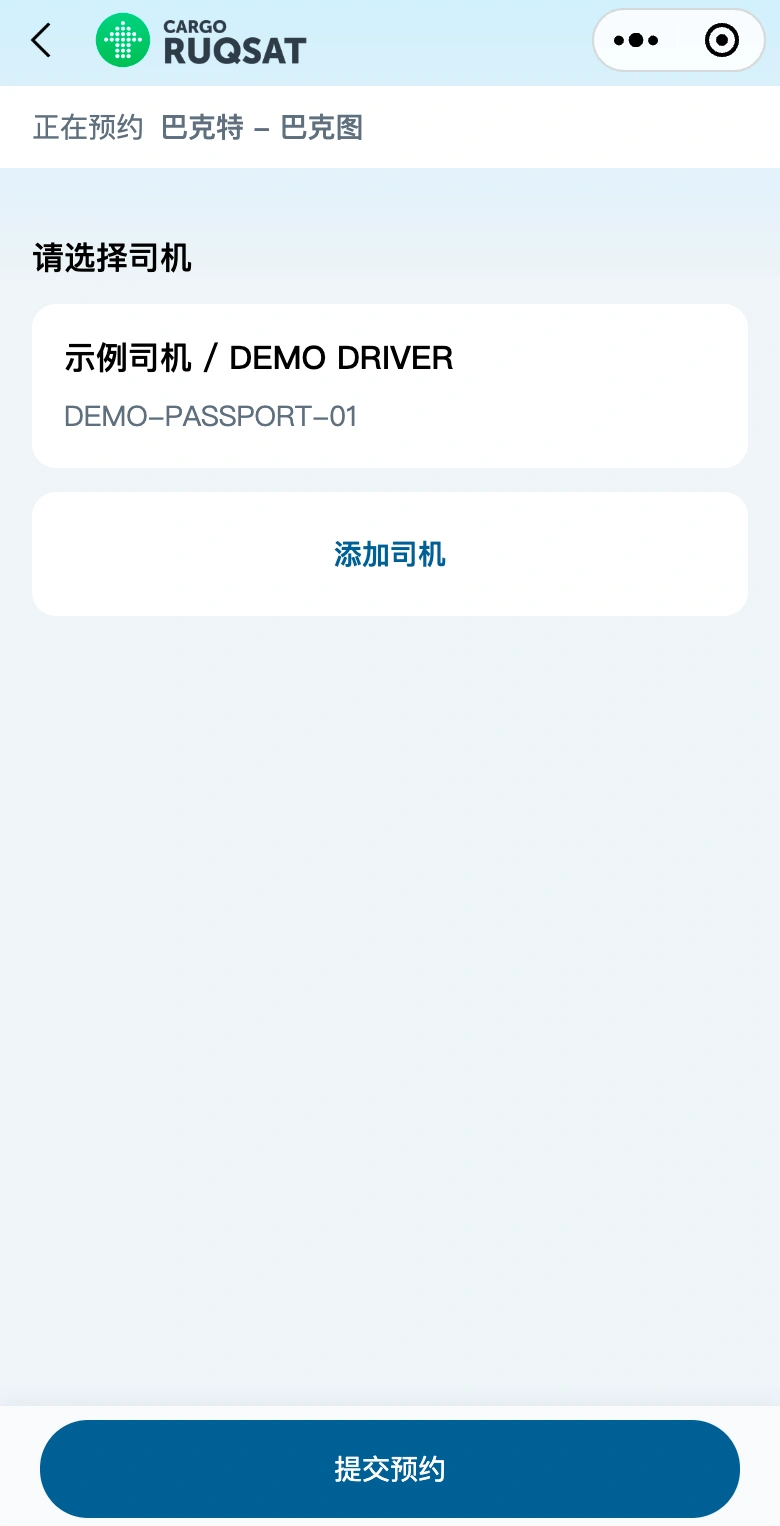
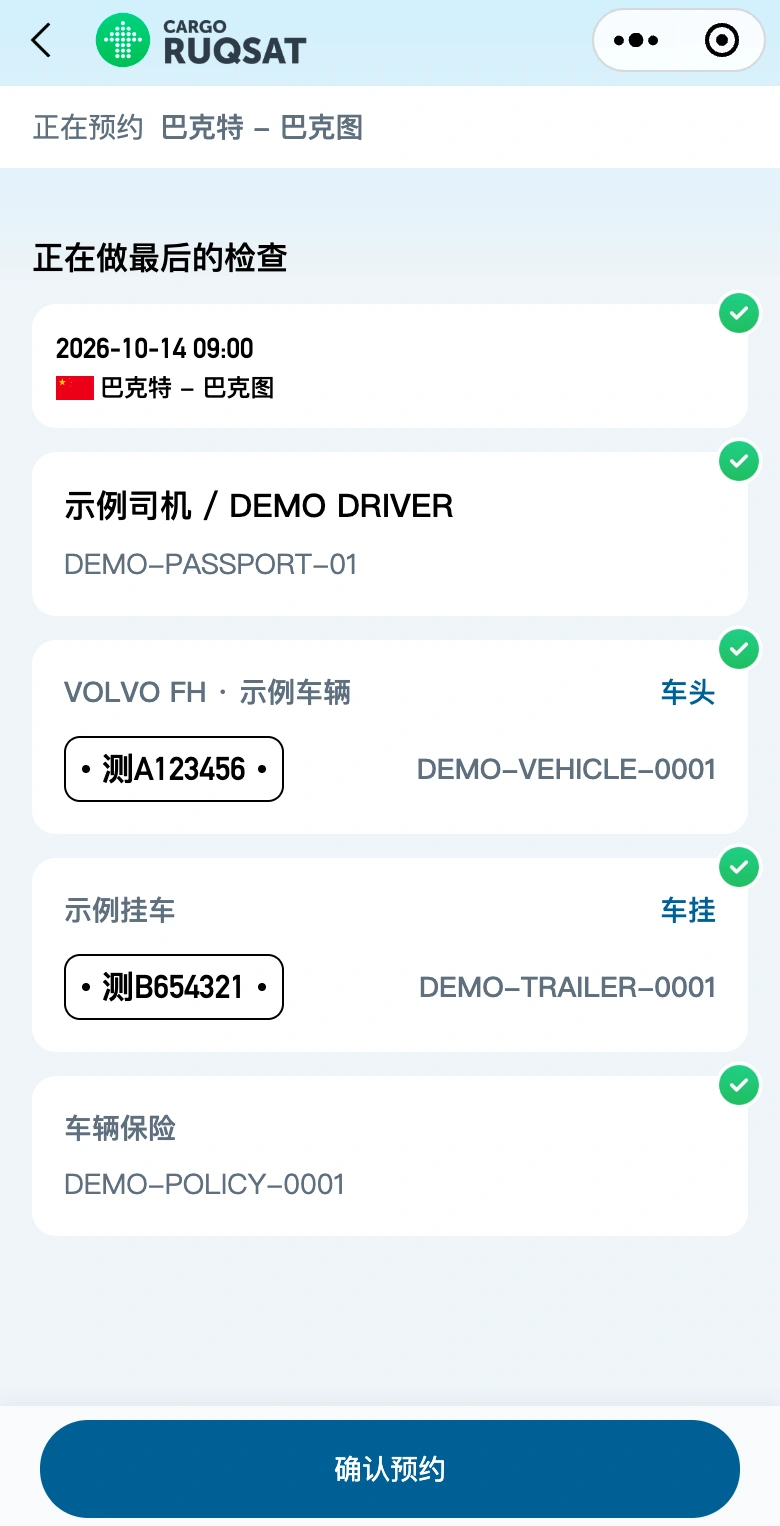
Check before submitting
Review checkpoint, time, people, vehicles and insurance.
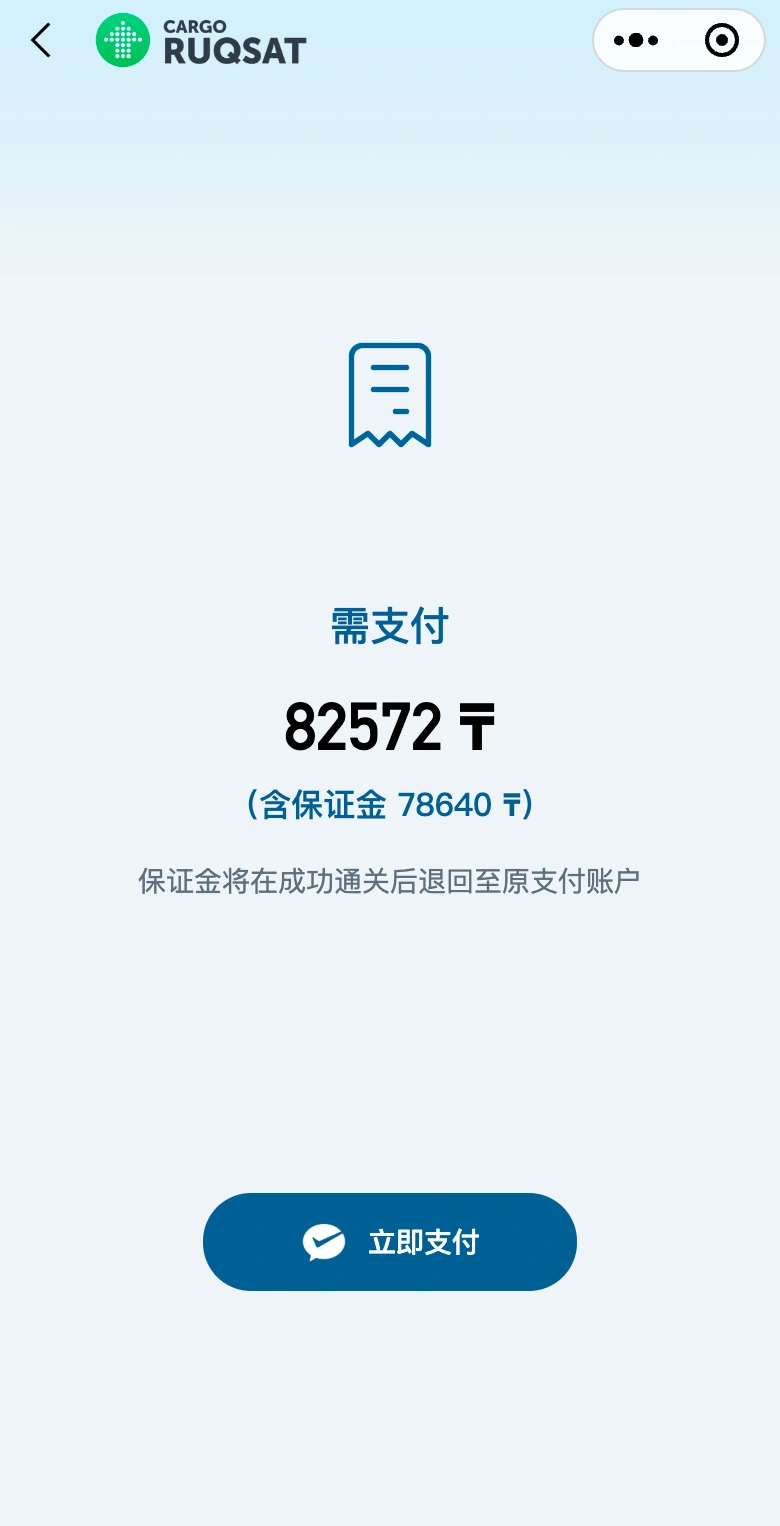
Overseas WeChat Pay
Review the crossing fee and deposit before payment.
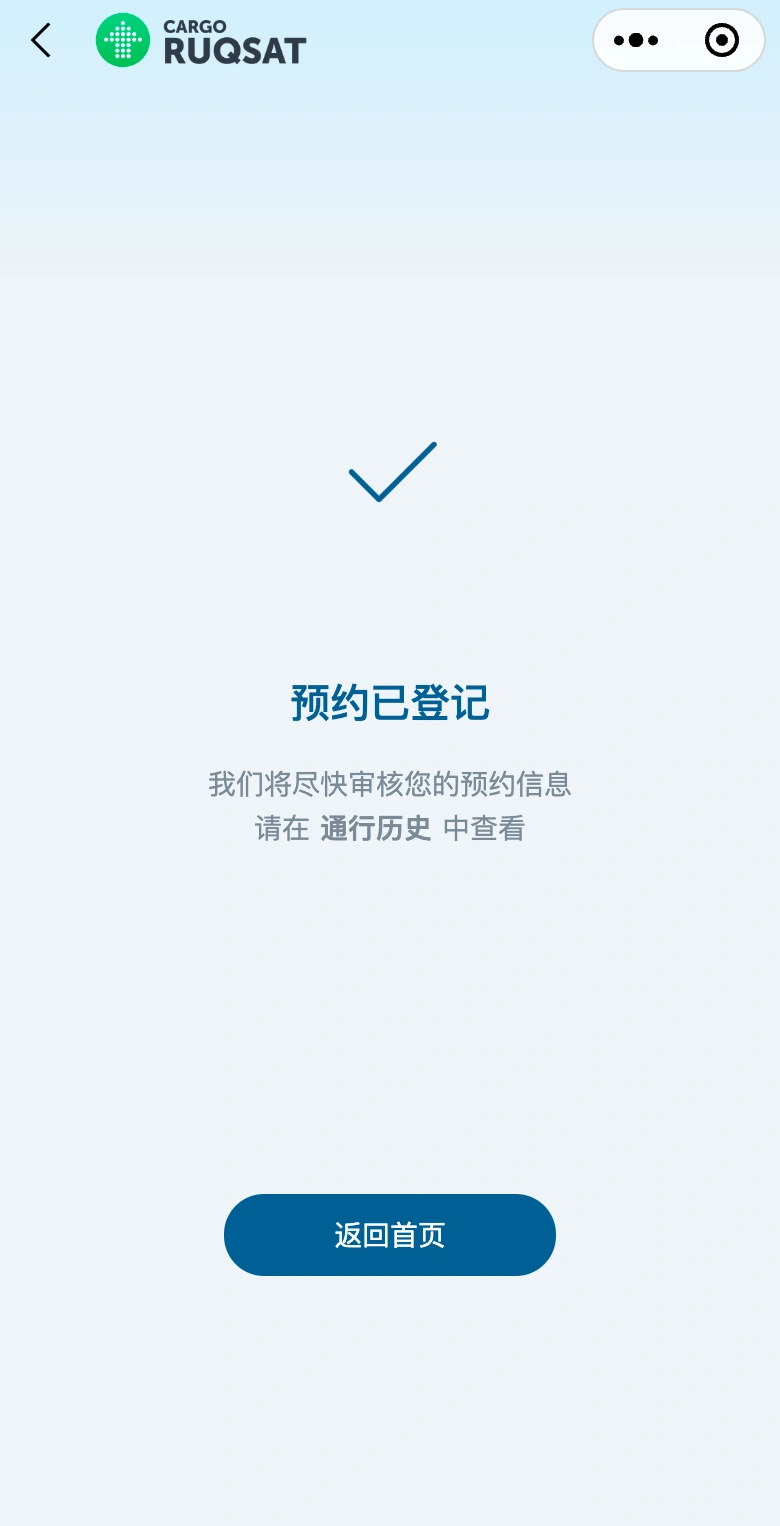
Know what happens next
A clear confirmation after the booking is registered.
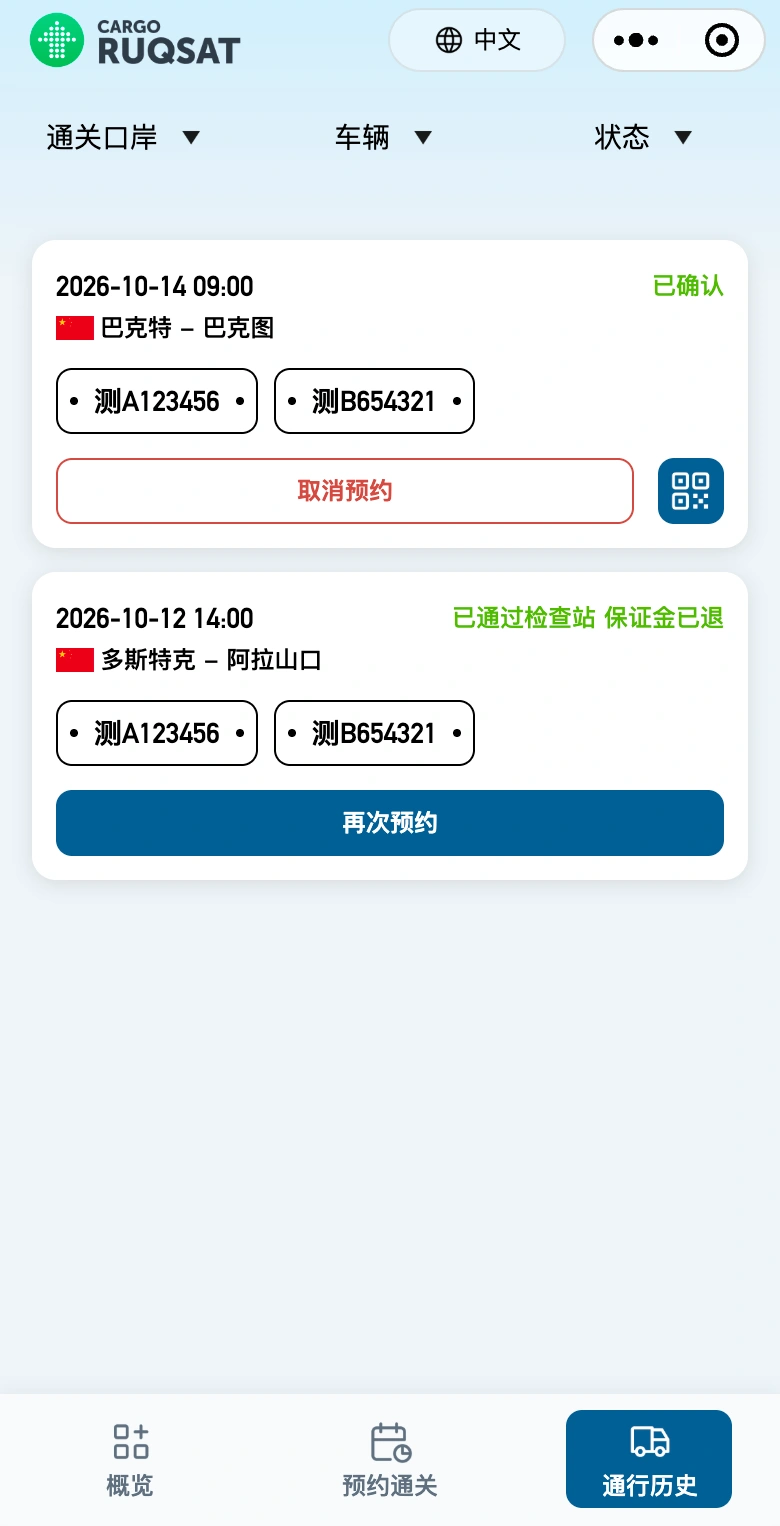
Follow each journey
Checkpoint, vehicles, time and status stay together.
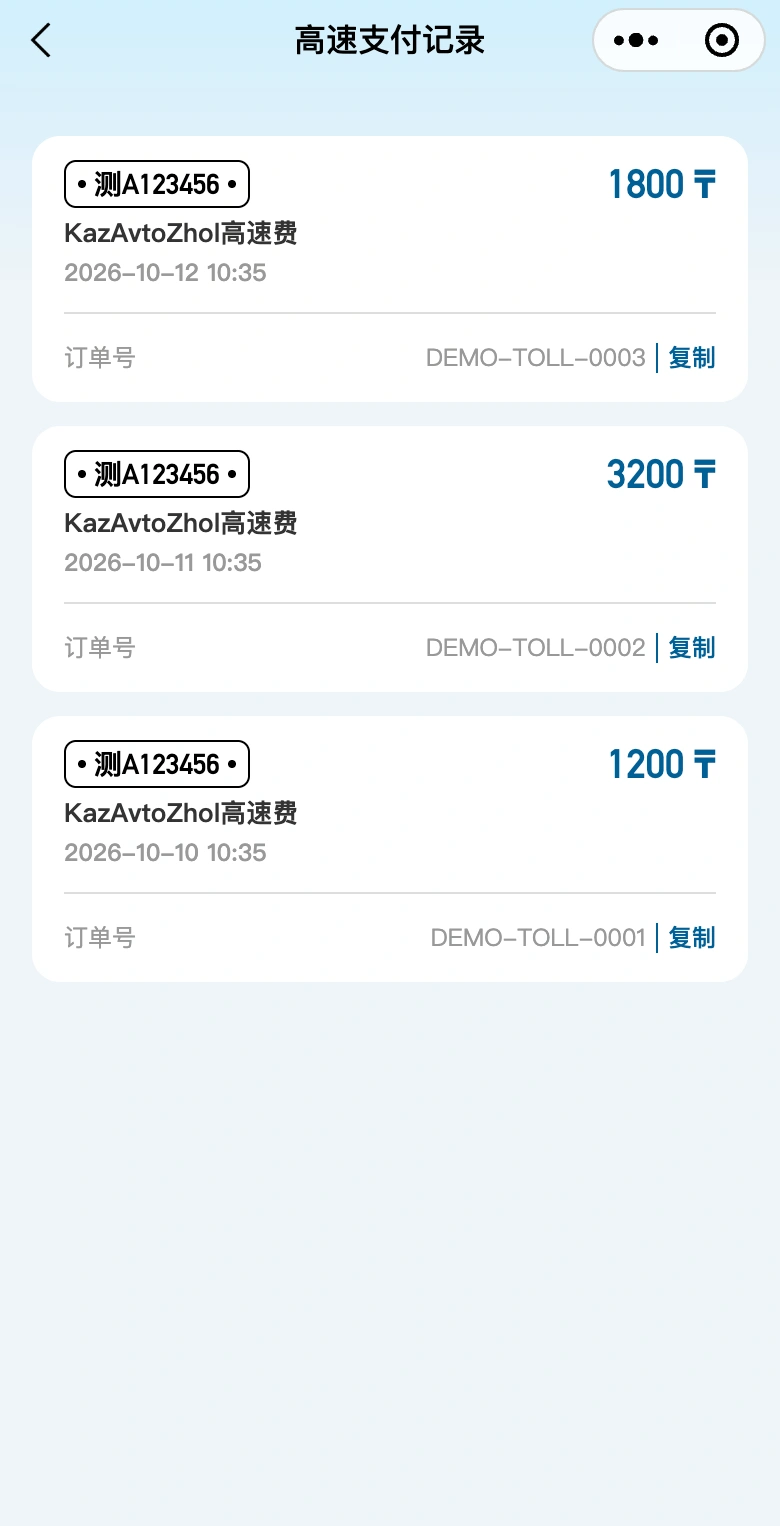
Keep a record of tolls
Review amounts, dates and order references for sample payments.
The same journey in Russian
A consistent interface across both product languages.
Clear information for a cross-border journey
China–Kazakhstan freight journeys bring together checkpoints, vehicles, drivers, timing and fees. Knowing where to cross, when to travel and how a booking is progressing helps drivers and transport teams plan their next step.
Silk Road Express (丝路速通) brings electronic border queue services to a WeChat mini program. Users can check checkpoint availability, choose a date and time slot and follow their booking status in a familiar mobile environment. We organised the experience around that core journey, giving a complex process a clear sequence.
From checking availability to following a booking
Check the border. Plan the time.
The overview presents checkpoint load with graded colour blocks and access to checkpoint details. Booking separates date and time selection into clear steps, keeping choices close to the user’s travel plan.
Keep vehicle and driver details connected
Vehicle, trailer and driver profiles can be reused during booking. A final review brings checkpoint, vehicle, driver and fee information together, reducing the need to check details across separate screens.
Payments and timely updates
The vehicle selection screen checks outstanding highway tolls and provides a payment entry. After booking confirmation, WeChat Pay handles the crossing fee and deposit. Toll payment history and booking records help users follow the result. WeChat subscription messages cover review, confirmation, checkpoint calls and clearance. The interactive preview uses illustrative amounts and notification states, with no real charges or message delivery.
Give every status a clear explanation
Journey cards combine the appointment time, checkpoint, vehicle and current status. Fee presentation, deposit status and cancellation confirmations provide context for the current booking. Available slots, prices and rules are determined by the live mini program.
Overseas WeChat Pay, connected to the journey
For overseas services used by China–Kazakhstan freight teams, we integrated WeChat Pay into the mini program’s crossing fee, deposit and highway toll payment flows. Users can review the amount and open WeChat Pay directly, keeping payment for overseas services within a familiar mobile experience.
The interface presents booking and highway fees in Kazakhstani tenge (₸). Payment results connect to booking review and vehicle toll status. Fee checks before payment, result confirmation and refreshed business status after payment help users understand both the payment and their next step.
Chinese and Russian across the journey
Language support reaches beyond a few buttons. Navigation, forms, feedback and important confirmations are covered in Chinese and Russian. We account for longer Russian messages and changing line lengths, preserving a readable hierarchy in both interfaces.